

Home Egypt Information City Information
Cairo
Cairo The City of a Thousand Minarets
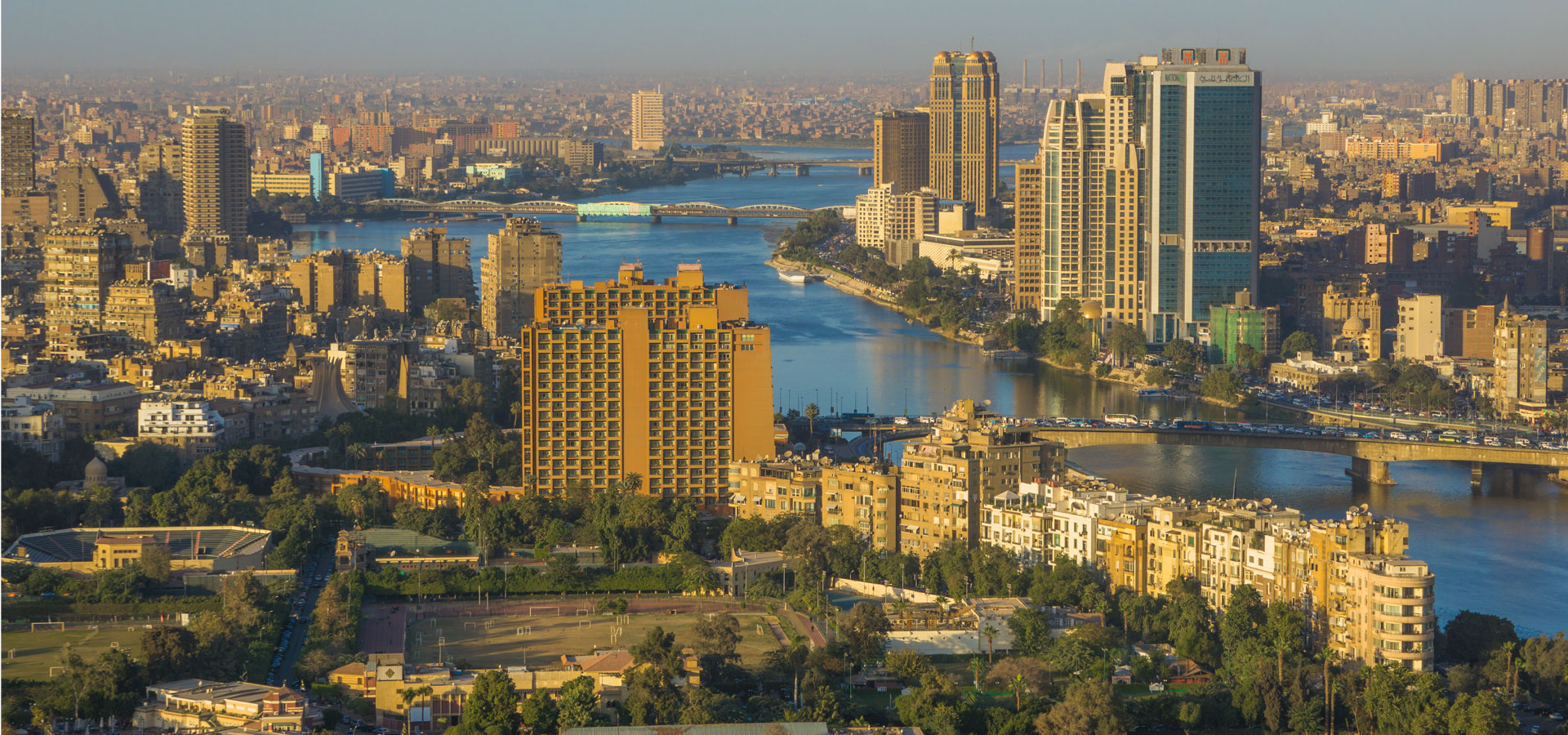
The city's metropolitan area is one of the largest in Africa, the largest in the Middle East and 15th-largest in the world, and is associated with ancient Egypt, as the famous Giza pyramid complex and the ancient city of Memphis are located in its geographical area. Located near the Nile Delta, modern Cairo was founded in 969 AD by the Fatimid dynasty, but the land composing the present-day city was the site of ancient national capitals whose remnants remain visible in parts of Old Cairo. Cairo has long been a center of the region's political and cultural life and is titled "the city of a thousand minarets" for its preponderance of Islamic architecture. Cairo has the oldest and largest film and music industries in the Middle East, as well as the world's second-oldest institution of higher learning, Al-Azhar University. Many international media, businesses, and organizations have regional headquarters in the city; the Arab League has had its headquarters in Cairo for most of its existence. With a population of over 9 million spread over 3,085 square kilometers (1,191 sq mi), Cairo is by far the largest city in Egypt. An additional 9.5 million inhabitants live in close proximity to the city. Cairo, like many other megacities, suffers from high levels of pollution and traffic. Cairo's metro, one of two in Africa (the other being in Algiers, Algeria), ranks among the fifteen busiest in the world, with over 1 billion annual passenger rides. The economy of Cairo was ranked first in the Middle East in 2005, and 43rd globally on Foreign Policy's 2010 Global Cities Index.
Luxor
Luxor City

Luxor is a city on the east bank of the Nile River in southern Egypt. It's on the site of ancient Thebes, the pharaohs’ capital at the height of their power, during the 16th–11th centuries B.C. Today's city surrounds 2 huge, surviving ancient monuments: graceful Luxor Temple and Karnak Temple, a mile north. The royal tombs of the Valley of the Kings and the Valley of the Queens are on the river’s west bank.
Aswan
Aswan
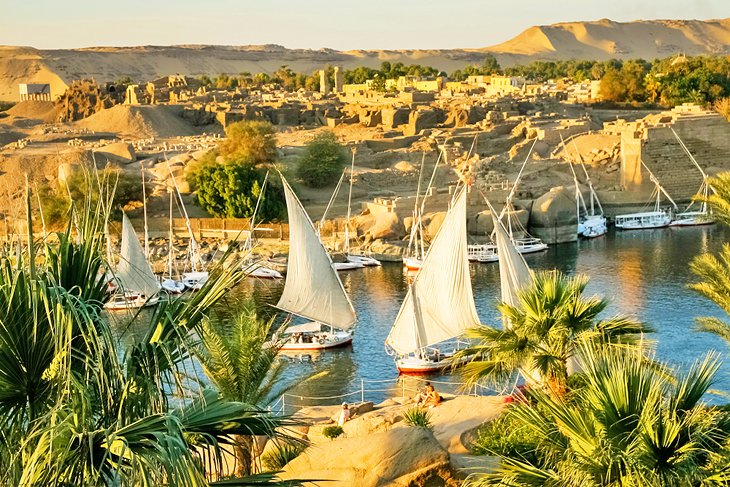
Aswan, a city on the Nile River, has been southern Egypt’s strategic and commercial gateway since antiquity. It contains significant archaeological sites like the Philae temple complex, on Agilkia Island near the landmark Aswan Dam. Philae’s ruins include the columned Temple of Isis, dating to the 4th century B.C. Downriver, Elephantine Island holds the Temple of Khnum, from the Third Dynasty. Aswan is a busy market and tourist center located just north of the Aswan Dam on the east bank of the Nile at the first cataract. The modern city has expanded and includes the formerly separate community on the island of Elephantine. The city is part of the UNESCO Creative Cities Network in the category of craft and folk art.
Alexandria
Alexandria: The Bride of the Mediterranean
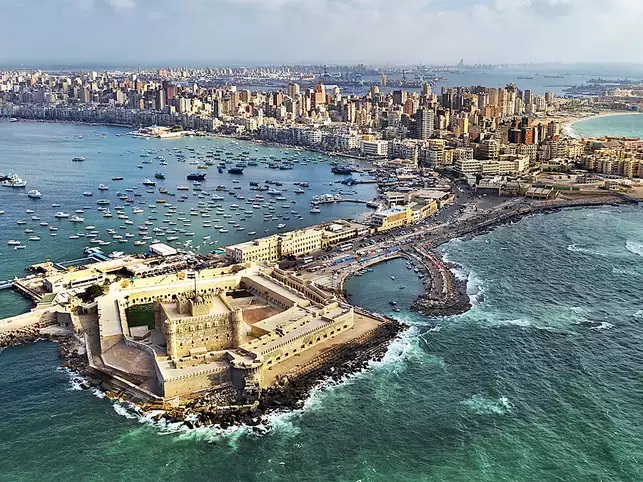
Alexandria is the second-largest city in Egypt and a major economic center, extending about 32 km (20 mi) along the coast of the Mediterranean Sea in the north-central part of the country. Its low elevation on the Nile delta makes it highly vulnerable to rising sea levels. Alexandria is an important industrial center because of its natural gas and oil pipelines from Suez. Alexandria is also a popular tourist destination. Alexandria was founded around a small, ancient Egyptian town c. 332 BC by Alexander the Great, king of Macedon and leader of the Greek League of Corinth, during his conquest of the Achaemenid Empire. Alexandria became an important center of Hellenistic civilization and remained the capital of Ptolemaic Egypt and Roman and Byzantine Egypt for almost 1,000 years, until the Muslim conquest of Egypt in AD 641, when a new capital was founded at Fustat (later absorbed into Cairo). Hellenistic Alexandria was best known for the Lighthouse of Alexandria (Pharos), one of the Seven Wonders of the Ancient World; its Great Library (the largest in the ancient world); and the Necropolis, one of the Seven Wonders of the Middle Ages. Alexandria was at one time the second most powerful city of the ancient Mediterranean region, after Rome. Ongoing maritime archaeology in the harbor of Alexandria, which began in 1994, is revealing details of Alexandria both before the arrival of Alexander, when a city named Rhacotis existed there and during the Ptolemaic dynasty. From the late 18th century, Alexandria became a major center of the international shipping industry and one of the most important trading centers in the world, both because it profited from the easy overland connection between the Mediterranean Sea and the Red Sea, and the lucrative trade in Egyptian cotton.
Abu Simbel
Abu Simbel Village
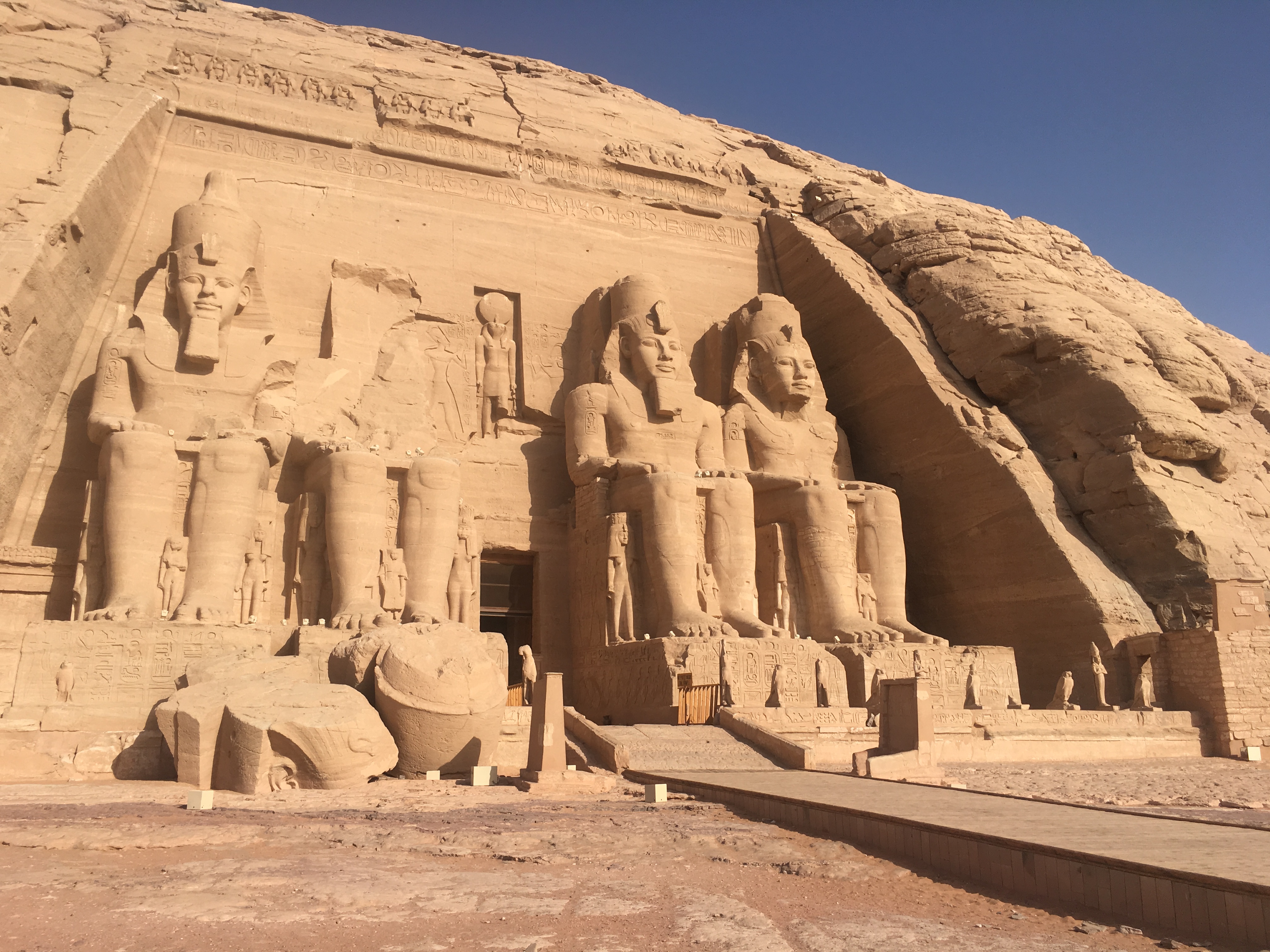
is a village in the Egyptian part of Nubia, about 240 kilometers southwest of Aswan and near the border with Sudan. As of 2012, it has about 2600 inhabitants. It is best known as the site of the Abu Simbel temples, which were built by King Ramses II. Abu Simbel is linked to the governorate capital of Aswan by a road that passes west of Lake Nasser, through the Libyan Desert. It is used predominantly by tour buses bringing visitors to the Abu Simbel temples, but it also has importance for the irrigation projects in the parts of the desert situated near the reservoir. Lake Nasser is navigable, so Abu Simbel is also reachable from the lakeside. A few cruise ships navigate the lake upstream of the Aswan Dam. The village is reachable by air via the Abu Simbel Airport. Abu Simbel is located in one of the warmest and driest regions of Egypt. In the summer months, the high temperatures are easily 40 °C on average. Despite the great temperature differences between day and night, temperatures in summer seldom fall below 20 °C. Winters are mild with highs around 25 °C, when temperatures can sometimes fall below 10 °C at night. Precipitation is so rare here that it is impossible to state a "rainy season" for Abu Simbel.
Giza
Giza, The city of the Last Ancient Wonder
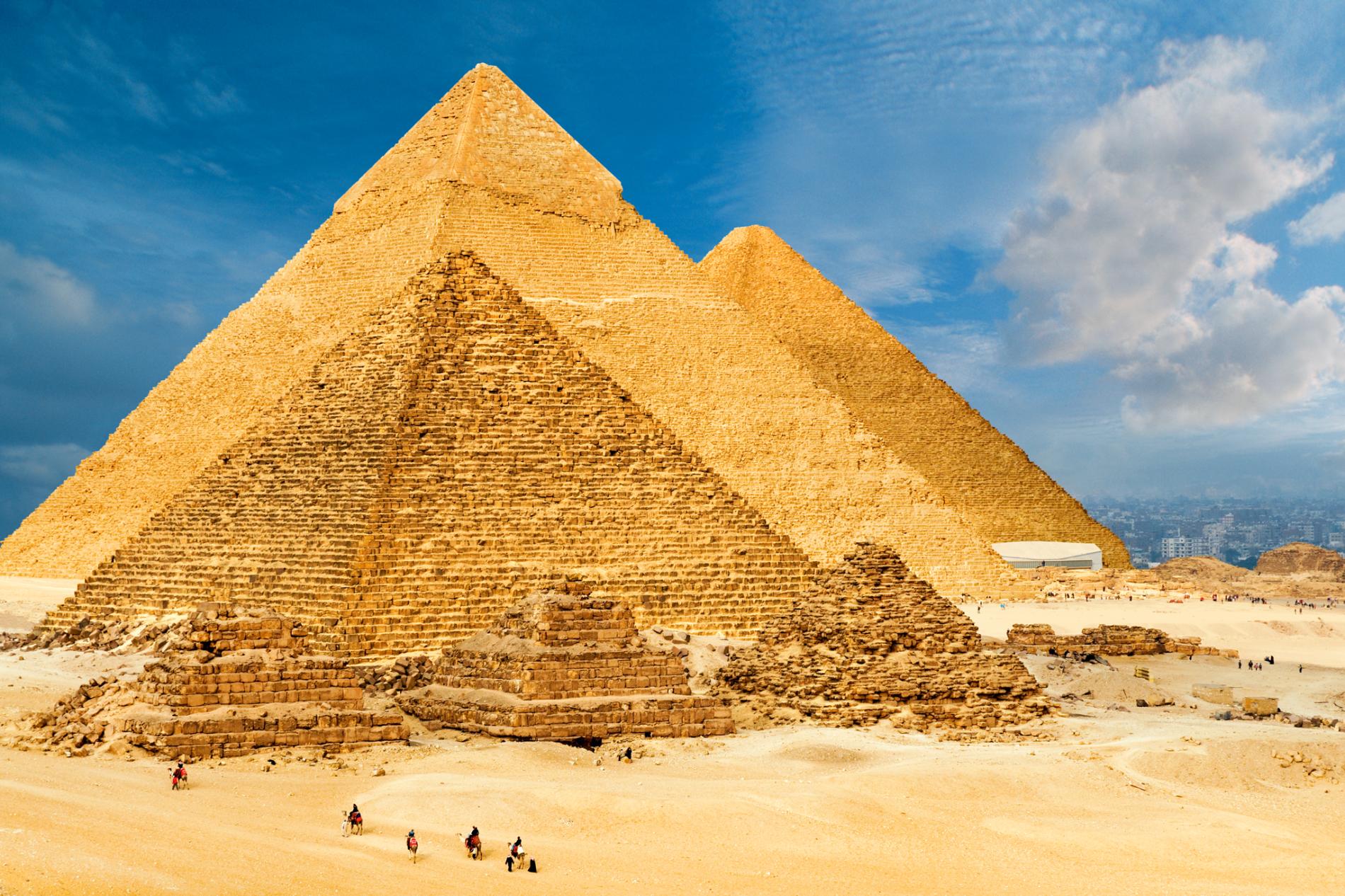
Giza is the third-largest city in Egypt and the capital of the Giza Governorate. It is located on the west bank of the Nile, 4.9 km (3 mi) southwest of central Cairo. Along with Cairo Governorate, Shubra El Kheima, Helwan, 6th October City and Obour, the six form the Greater Cairo metropolis. Giza lies less than 20 km (12.43 mi) north of "Mn Nefer" (Memphis in Roman), which means "the beautiful wall" in the ancient Egyptian language, and which was the capital city of the first unified Egyptian state from the days of the first pharaoh, Narmer. Giza is most famous as the location of the Giza Plateau: the site of some of the most impressive ancient monuments in the world, including a complex of ancient Egyptian royal mortuary and sacred structures, including the Great Sphinx, the Great Pyramid of Giza, and a number of other large pyramids and temples. Giza has always been a focal point in Egypt's history due to its location close to Memphis, the ancient pharaonic capital of the Old Kingdom. Its St. George Cathedral is the episcopal see of the Coptic Catholic Eparchy of Giza. The Great Sphinx of Giza, commonly referred to as the Sphinx of Giza or just the Sphinx, is a limestone statue of a reclining sphinx, a mythical creature with the body of a lion and the head of a human. Facing directly from West to East, it stands on the Giza Plateau on the west bank of the Nile in Giza, Egypt. The face of the Sphinx is generally believed to represent the pharaoh, Khafre. Cut from the bedrock, the original shape of the Sphinx has been restored with layers of blocks. It measures 73 m (240 ft) long from paw to tail, 20 m (66 ft) high from the base to the top of the head and 19 m (62 ft) wide at its rear haunches. It is the oldest known monumental sculpture in Egypt and is commonly believed to have been built by ancient Egyptians of the Old Kingdom during the reign of the pharaoh Khafre (c. 2558–2532 BC).
Jerusalem
Jerusalem
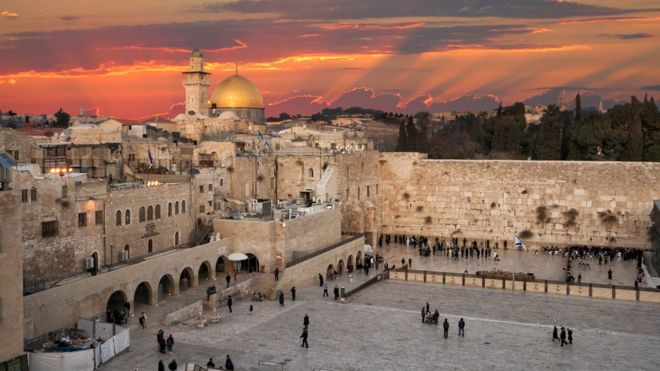
Jerusalem is a city in the Middle East, located on a plateau in the Judaean Mountains between the Mediterranean and the Dead Sea. It is one of the oldest cities in the world and is considered holy to the three major Abrahamic religions—Judaism, Christianity, and Islam.
Dubai
Dubai
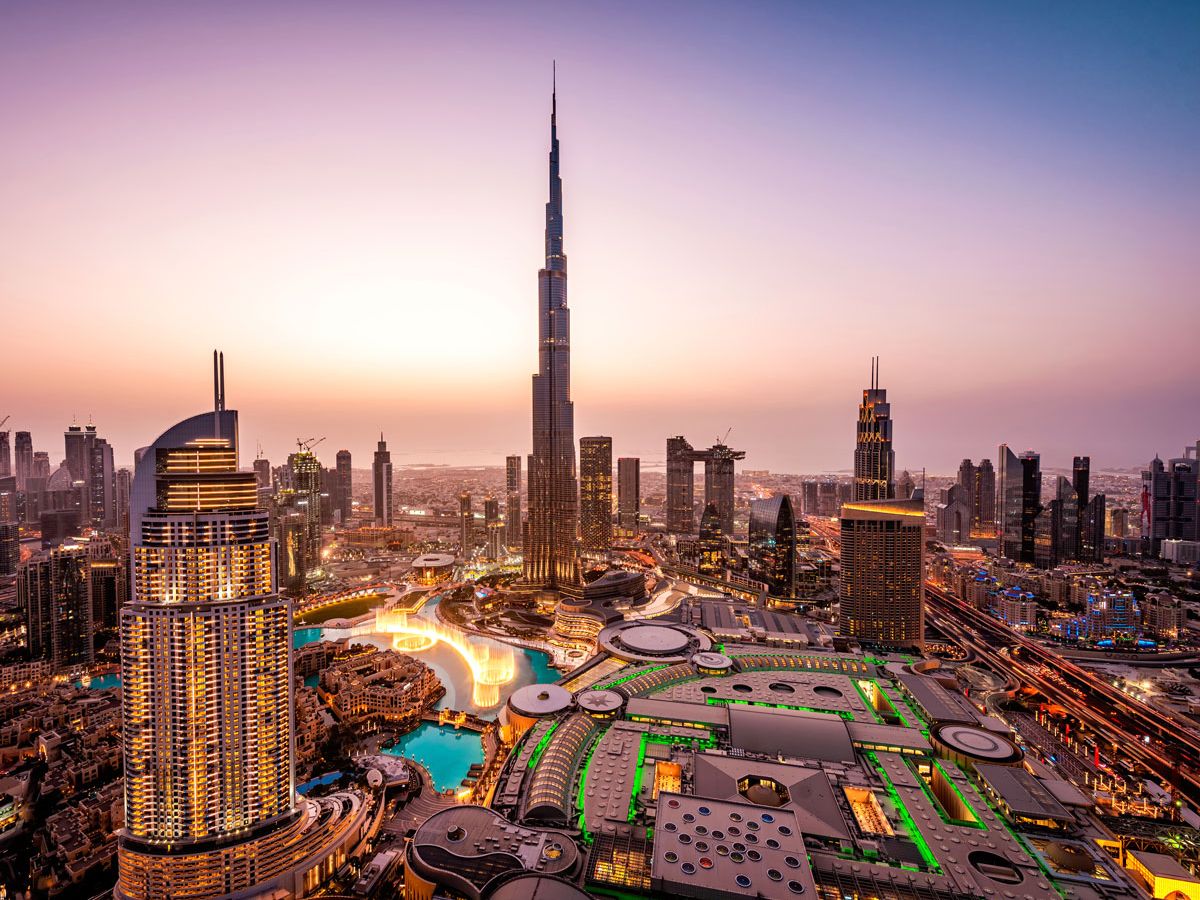
Located on the southeast coast of the Persian Gulf, Dubai is a global city and the business hub of the Middle East. It is also a major global transport hub for passengers and cargo. Oil revenue helped accelerate the development of the city, which was already a major mercantile hub. Today, less than 5% of the emirate's revenue comes from oil. A center for regional and international trade since the early 20th century, Dubai's economy relies on revenues from trade, tourism, aviation, real estate, and financial services. Dubai is a city and emirate in the United Arab Emirates known for luxury shopping, ultramodern architecture, and a lively nightlife scene. Burj Khalifa, an 830m-tall tower, dominates the skyscraper-filled skyline. At its foot lies Dubai Fountain, with jets and lights choreographed to music. On artificial islands just offshore is Atlantis, The Palm, a resort with water and marine-animal parks.
Istanbul
Ephesus
Ephesus

Ephesus was an ancient Greek city on the coast of Ionia, three kilometers southwest of present-day Selçuk in İzmir Province, Turkey. It was built in the 10th century BC on the site of the former Arzawan capital by Attic and Ionian Greek colonists.
İzmir
Ankara
Ankara

Ankara, Turkey’s cosmopolitan capital, sits in the country’s central Anatolia region. It’s a center for the performing arts, home to the State Opera and Ballet, the Presidential Symphony Orchestra and several national theater companies. Overlooking the city is Anitkabir, the enormous hilltop mausoleum of Kemal Atatürk, modern Turkey’s first president, who declared Ankara the capital in 1923.
Bursa
Bursa
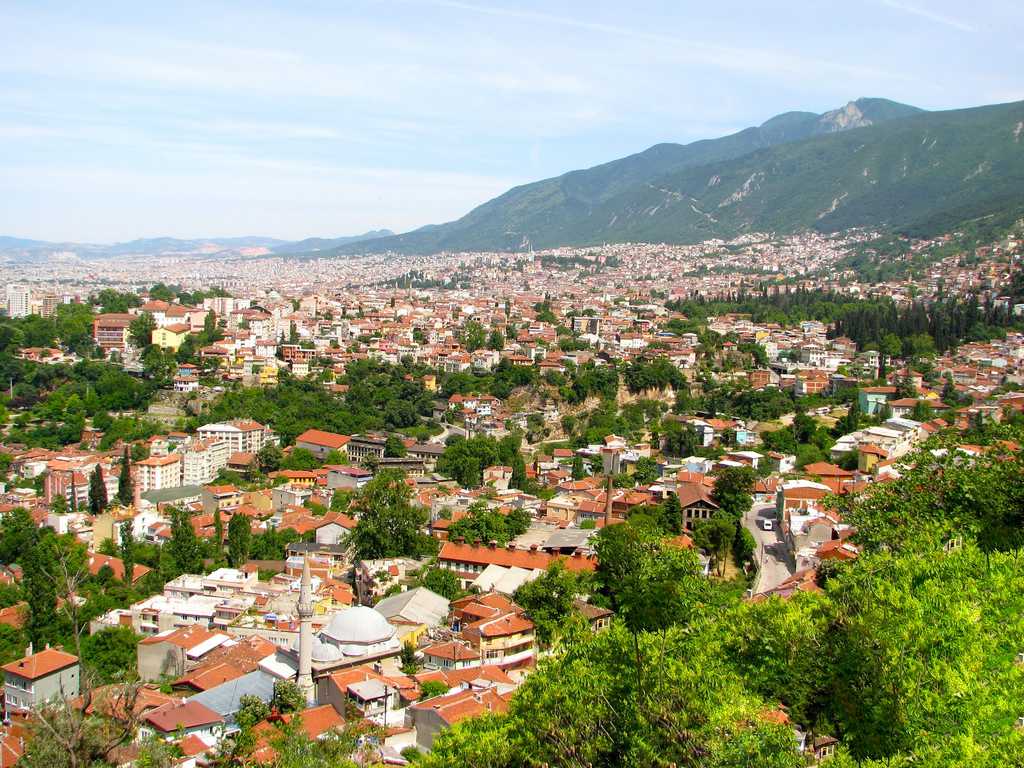
Bursa is a large city in Turkey, located in northwestern Anatolia, within the Marmara Region. It is the fourth most populous city in Turkey and one of the most industrialized metropolitan centers in the country. The city is also the administrative center of Bursa Province. Bursa (Ottoman Turkish: بورسا) was the first major and second overall capital of the Ottoman State between 1335 and 1363. The city was referred to as Hüdavendigar (خداوندگار, from Persian "God's gift") during the Ottoman period, while a more recent nickname is Yeşil Bursa ("Green Bursa") in reference to the parks and gardens located across its urban fabric, as well as to the vast and richly varied forests of the surrounding region. Mount Uludağ, the ancient Mysian Olympus, towers over it, and has a well-known ski resort. Bursa has rather orderly urban growth and borders a fertile plain. The mausoleums of the early Ottoman sultans are located in Bursa and the city's main landmarks include numerous edifices built throughout the Ottoman period. Bursa also has thermal baths and several museums, including a museum of archaeology. The shadow play characters Karagöz and Hacivat are based on historic personalities who lived and died in Bursa. The city is also known for Turkish dishes such as İskender kebap, its candied marron glacé chestnuts, Bursa peaches, and production of Turkish Delight. Bursa houses Uludağ University, and its population can claim one of the highest overall levels of education in Turkey. The historic towns of İznik (Nicaea), Mudanya and Zeytinbağı are in its province.
Haifa
Haifa

Haifa is a northern Israeli port city built in tiers extending from the Mediterranean up the north slope of Mount Carmel. The city’s most iconic sites are the immaculately landscaped terraces of the Bahá'í Gardens and, at their heart, the gold-domed Shrine of the Báb. At the foot of the gardens lies the German Colony, with shops, galleries, and restaurants in 19th-century buildings.
Tiberias
Tiberias
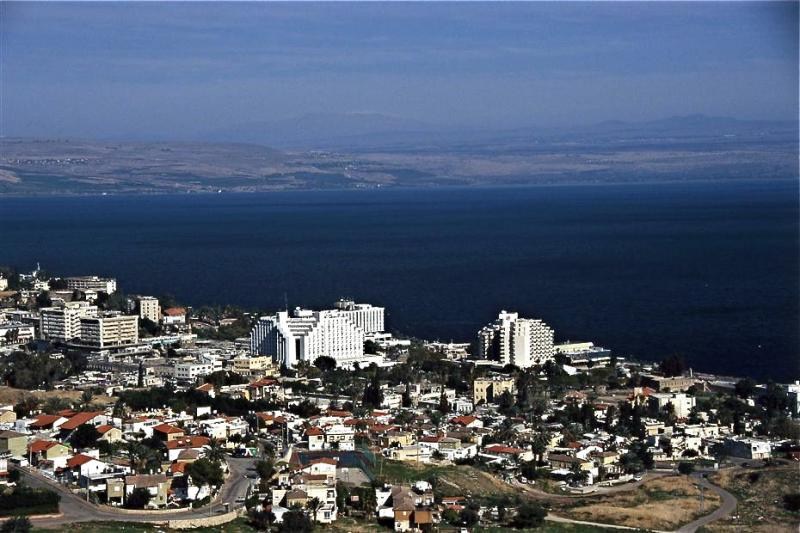
is an Israeli city on the western shore of the Sea of Galilee. Established around 20 CE, it was named in honor of the second emperor of the Roman Empire, Tiberius. In 2018 it had a population of 44,234. Tiberias has been held in great respect in Judaism since the mid-2nd century CE, and since the 16th century has been considered one of Judaism's Four Holy Cities, along with Jerusalem, Hebron, and Safed. In the 2nd–10th centuries, Tiberias was the largest Jewish city in the Galilee and the political and religious hub of the Jews in the Land of Israel. Its immediate neighbor to the south, Hammat Tiberias, which is now part of modern Tiberias, has been known for its hot springs, believed to cure skin and other ailments, for some two thousand years.
Bethlehem
Bethlehem City
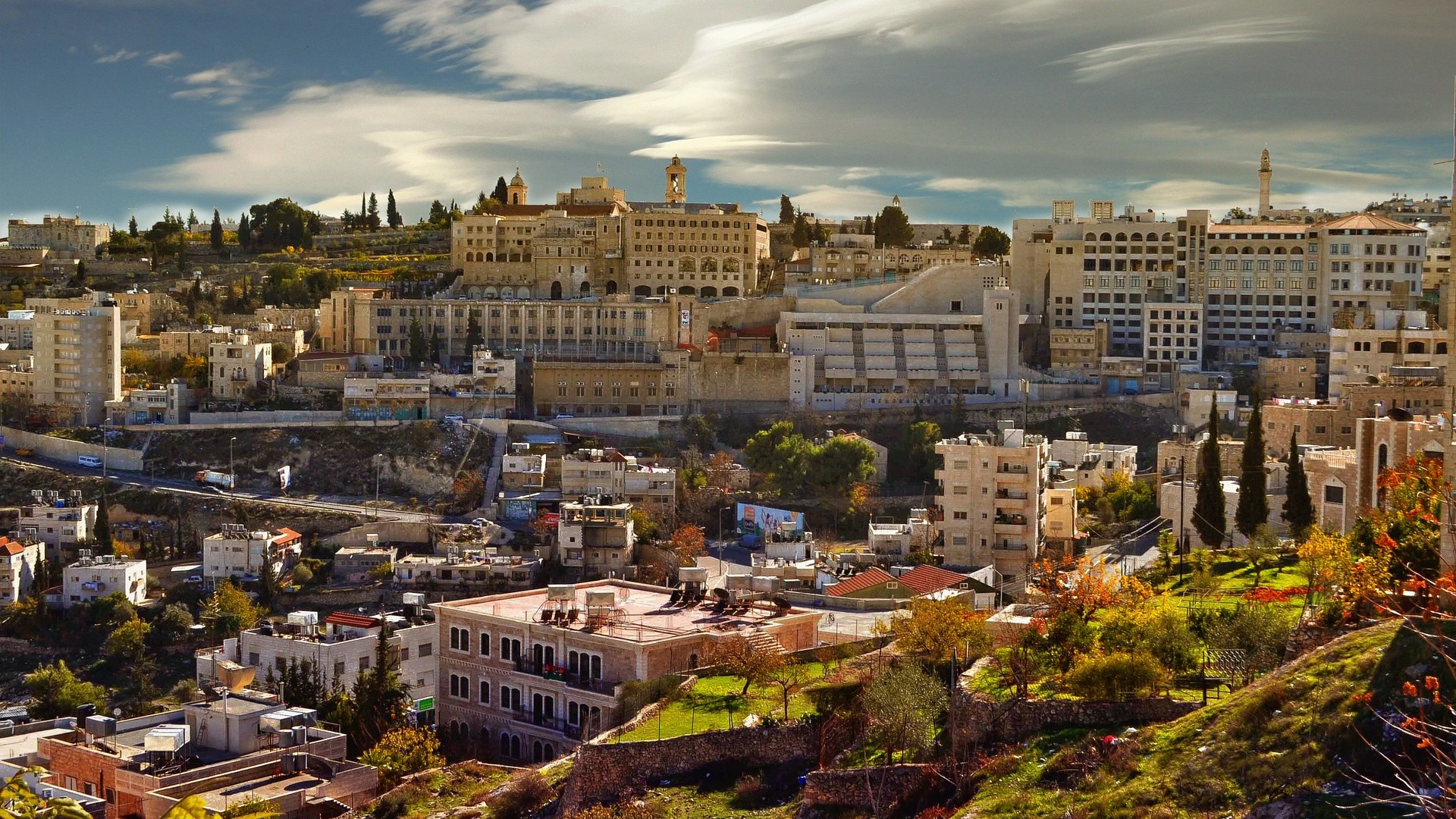
Bethlehem is a Palestinian town south of Jerusalem in the West Bank. The biblical birthplace of Jesus, it’s a major Christian pilgrimage destination. The birth is marked by an inlaid silver star in a grotto under the 6th-century Church of the Nativity, which shares Manger Square with the 15th-century Church of St. Catherine and the 1860 Mosque of Omar. The economy is primarily tourist-driven, peaking during the Christmas season when Christians make the pilgrimage to the Church of the Nativity. Rachel's Tomb, an important Jewish holy site, is located at the northern entrance of Bethlehem. The earliest known mention of the city was in the Amarna correspondence of 1350–1330 BCE during its habitation by the Canaanites. The Hebrew Bible, which says that the city of Bethlehem was built up as a fortified city by Rehoboam, identifies it as the city David was from and where he was crowned as the king of Israel. The Gospels of Matthew and Luke identify Bethlehem as the birthplace of Jesus. Bethlehem was destroyed by Emperor Hadrian during the second-century Bar Kokhba revolt; its rebuilding was promoted by Empress Helena, mother of Constantine the Great, who commissioned the building of its great Church of the Nativity in 327 CE. The church was badly damaged by the Samaritans, who sacked it during a revolt in 529, but was rebuilt a century later by Emperor Justinian I. Bethlehem became part of Jund Filastin following the Muslim conquest in 637. Muslim rule continued in Bethlehem until its conquest in 1099 by a crusading army, who replaced the town's Greek Orthodox clergy with a Latin one. In the mid-13th century, the Mamluks demolished the city's walls, which were subsequently rebuilt under the Ottomans in the early 16th century. Control of Bethlehem passed from the Ottomans to the British at the end of World War I. Bethlehem came under Jordanian rule during the 1948 Arab-Israeli War and was later captured by Israel in the 1967 Six-Day War. Since the 1995 Oslo Accords, Bethlehem has been administered by the Palestinian Authority. Following an influx of refugees as a result of Israeli advances in the 1967 war, Bethlehem has a Muslim majority but is still home to a significant Palestinian Christian community. It is now encircled and encroached upon by dozens of Israeli settlements and the Israeli West Bank barrier, which separates both Muslim and Christian communities from their land and livelihoods, and sees a steady exodus of those from both communities being driven out.
Nazareth
Nazareth
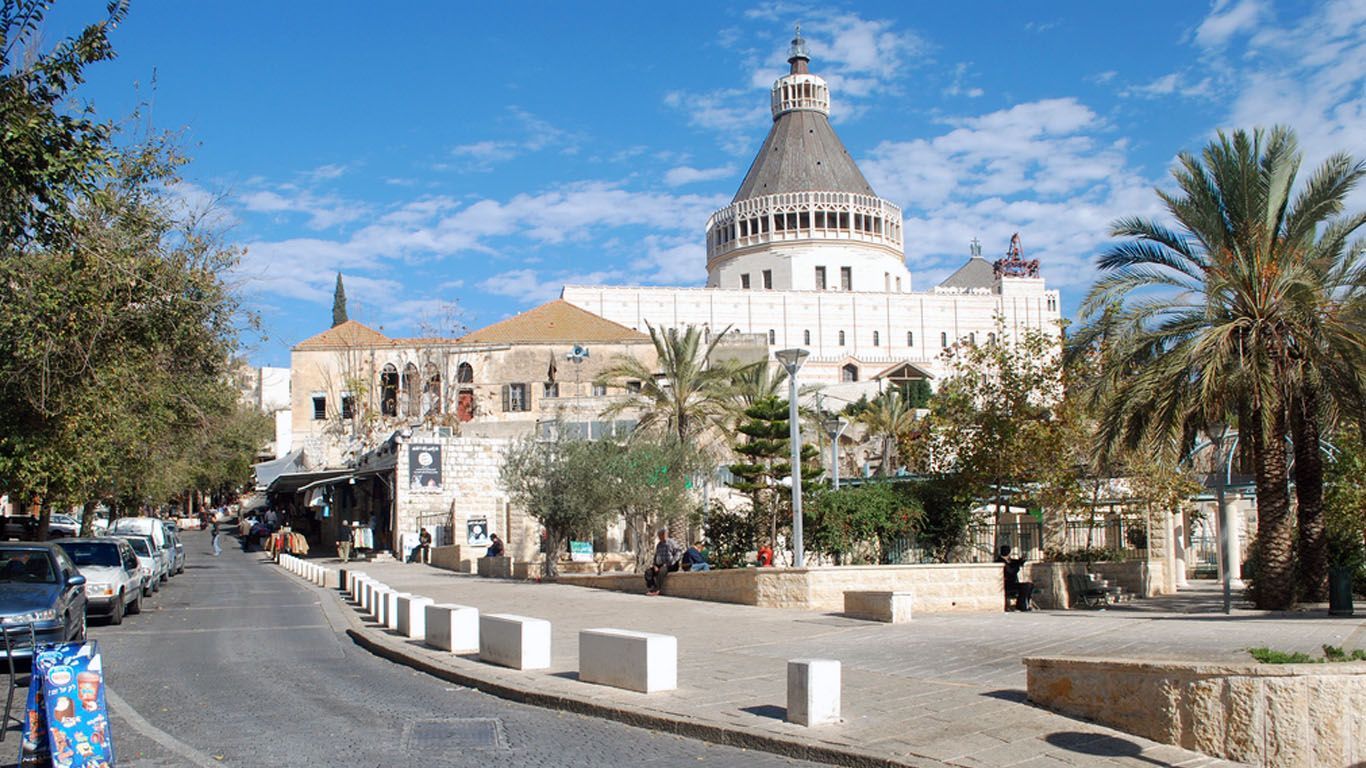
is the largest city in the Northern District of Israel. Nazareth is known as "the Arab capital of Israel".]In 2018 its population was 77,064 The inhabitants are predominantly Arab citizens of Israel, of whom 69% are Muslim and 30.9% Christian. Nazareth Illit (lit. "Upper Nazareth"), declared a separate city in June 1974, is built alongside old Nazareth and had a Jewish population of 40,312 in 2014. In the New Testament, the town is described as the childhood home of Jesus, and as such is a center of Christian pilgrimage, with many shrines commemorating biblical events.
Golan
Golan
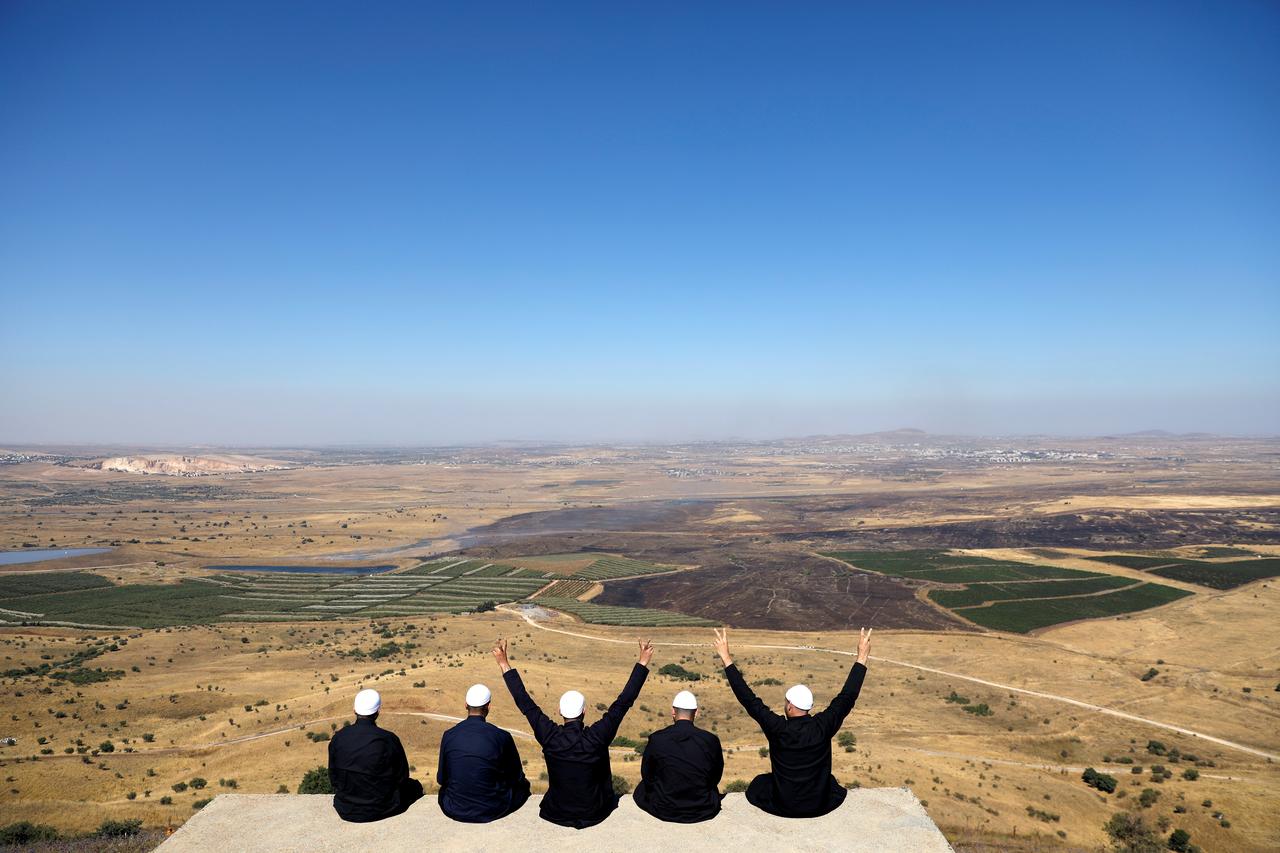
Golan Heights or simply the Golan is a region in the Levant, spanning about 1,800 square kilometers (690 sq mi). The region defined as the Golan Heights differs between disciplines: as a geological and biogeographical region, the Golan Heights is a basaltic plateau bordered by the Yarmouk River in the south, the Sea of Galilee and Hula Valley in the west, the Anti-Lebanon with Mount Hermon in the north and Wadi Raqqad in the east; and as a geopolitical region, the Golan Heights is the area captured from Syria and occupied by Israel during the 1967 Six-Day War, territory which has been administered as part of Israel since 1981. This region includes the western two-thirds of the geological Golan Heights and the Israeli-occupied part of Mount Hermon. The earliest evidence of human habitation on the Golan dates to the Upper Paleolithic period. According to the Bible, the Amorite Kingdom in Bashan was conquered by Israelites during the reign of King Og. Throughout the Old Testament period, the Golan was "the focus of a power struggle between the kings of Israel and the Aramaeans who were based near modern-day Damascus." After Assyrian and Babylonian rule, Persia dominated the region and allowed it to be resettled by returning Jews from the Babylonian Captivity. The Itureans, an Arab or Aramaic people, settled there in the 2nd century BCE and remained until the end of the Byzantine period. Gamla, the capital of Jewish Galaunitis, would play a major role in the Jewish-Roman wars, Organized Jewish settlement in the region came to an end in 636 CE when it was conquered by Arabs under Umar ibn al-Khattāb. In the 16th century, the Golan was conquered by the Ottoman Empire and was part of the Vilayet of Damascus until it was transferred to the French mandate in 1918. When the mandate terminated in 1946, it became part of the newly independent Syrian Republic. Since the 1967 Six-Day War, the western two-thirds of the Golan Heights has been occupied and administered by Israel, whereas the eastern third remains under control of the Syrian Arab Republic. Following the war, Syria dismissed any negotiations with Israel as part of the Khartoum Resolution. Construction of Israeli settlements began in the remainder of the territory held by Israel, which was under military administration until the Knesset passed the Golan Heights Law in 1981, which applied Israeli law to the territory;[20] a move that has been described as an annexation. This move was condemned by the United Nations Security Council in Resolution 497, which stated that "the Israeli decision to impose its laws, jurisdiction, and administration in the occupied Syrian Golan Heights is null and void and without international legal effect", and Resolution 242, which emphasises "inadmissibility of the acquisition of territory by war". Israel maintains it has a right to retain the Golan, also citing the text of UN Resolution 242, which calls for "safe and recognized boundaries free from threats or acts of force". After the onset of the Syrian Civil War, control of the Syrian-administered part of the Golan Heights was split between the government and opposition forces, with the UNDOF maintaining a 266 km2 (103 sq mi) buffer zone in between, to implement the ceasefire of the Purple Line.[23] From 2012 to 2018, the eastern Golan Heights became a scene of repeated battles between the Syrian Arab Army, rebel factions of the Syrian opposition including the moderate Southern Front, jihadist al-Nusra Front, and ISIL-affiliated factions. In July 2018, the Syrian government regained control of the eastern Golan Heights. On 25 March 2019, U.S. President Donald Trump proclaimed that "the United States recognizes that the Golan Heights are part of the State of Israel", making the United States the first and only country to recognize Israeli sovereignty over the effectively annexed regions of the Golan Heights. The 28 member states of the European Union declared, in turn, they do not recognize Israeli sovereignty, and several Israeli experts on international law stated the principle remains that land gained by defensive or offensive wars cannot be annexed under international law.
Amman
Amman City

is the capital and most populous city of Jordan, and the country's economic, political and cultural center. Situated in north-central Jordan, Amman is the administrative center of the Amman Governorate. The city has a population of 4,007,526 and a land area of 1,680 square kilometers (648.7 square miles). Today, Amman is considered to be among the most modernized Arab cities. It is a major tourist destination in the region, particularly among Arab and European tourists. The earliest evidence of settlement in Amman is in a Neolithic site known as 'Ain Ghazal, where some of the oldest human statues ever found dating to 7250 BC were uncovered. During the Iron Age, the city was known as Ammon, home to the Kingdom of the Ammonites. It was named Philadelphia during its Greek and Roman periods and was finally called Amman during the Islamic period. Abandoned for much of the medieval and post-medieval period, modern Amman dates to the late 19th century when Circassian immigrants were settled there by the Ottoman Empire in 1867. The first municipal council was established in 1909. Amman witnessed rapid growth after its designation as Transjordan's capital in 1921, and after several successive waves of refugees: Palestinians in 1948 and 1967; Iraqis in 1990 and 2003; and Syrians since 2011. It was initially built on seven hills but now spans over 19 hills combining 27 districts, which are administered by the Greater Amman Municipality headed by its mayor Yousef Shawarbeh. Areas of Amman have gained their names from either the hills (Jabal) or the valleys (Wadi) they occupy, such as Jabal Lweibdeh and Wadi Abdoun. East Amman is predominantly filled with historic sites that frequently host cultural activities, while West Amman is more modern and serves as the economic center of the city. Approximately two million visitors arrived in Amman in 2014, which made it the 93rd most visited city in the world and the 5th most visited Arab city. Amman has a relatively fast-growing economy, and it is ranked Beta− on the global city index. Moreover, it was named one of the Middle East and North Africa's best cities according to economic, labor, environmental, and socio-cultural factors. The city is among the most popular locations in the Arab world for multinational corporations to set up their regional offices, alongside Doha and only behind Dubai. It is expected that in the next 10 years these three cities will capture the largest share of multinational corporation activity in the region.
Petra
Petra
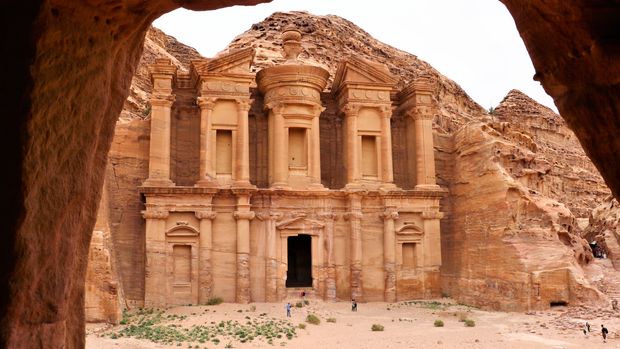
Petra is a famous archaeological site in Jordan's southwestern desert. Dating to around 300 B.C., it was the capital of the Nabatean Kingdom. Accessed via a narrow canyon called Al Siq, it contains tombs and temples carved into pink sandstone cliffs, earning its nickname, the "Rose City." Perhaps its most famous structure is 45m-high Al Khazneh, a temple with an ornate, Greek-style facade, and known as The Treasury.
Nebo
Nebo
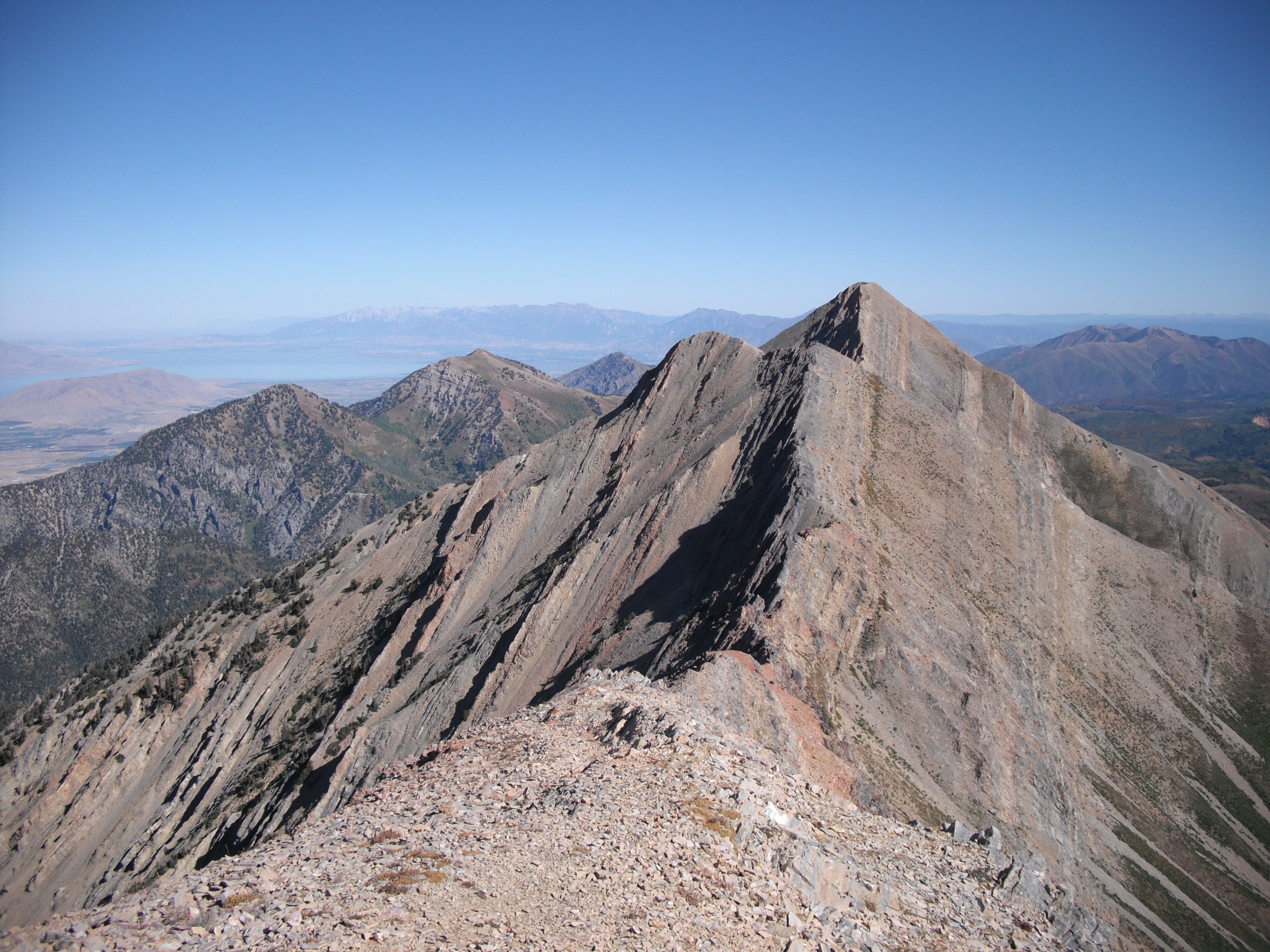
Nebo is an elevated ridge of the Abarim in Jordan, approximately 710 metres (2,330 ft) above sea level. It is mentioned in the Hebrew Bible as the place where Moses was granted a view of the Promised Land. The view from the summit provides a panorama of the land and, to the north, a more limited one of the valley of the River Jordan. The West Bank city of Jericho is usually visible from the summit, as is Jerusalem on a very clear day.
Athena
Athens: The Ancient City
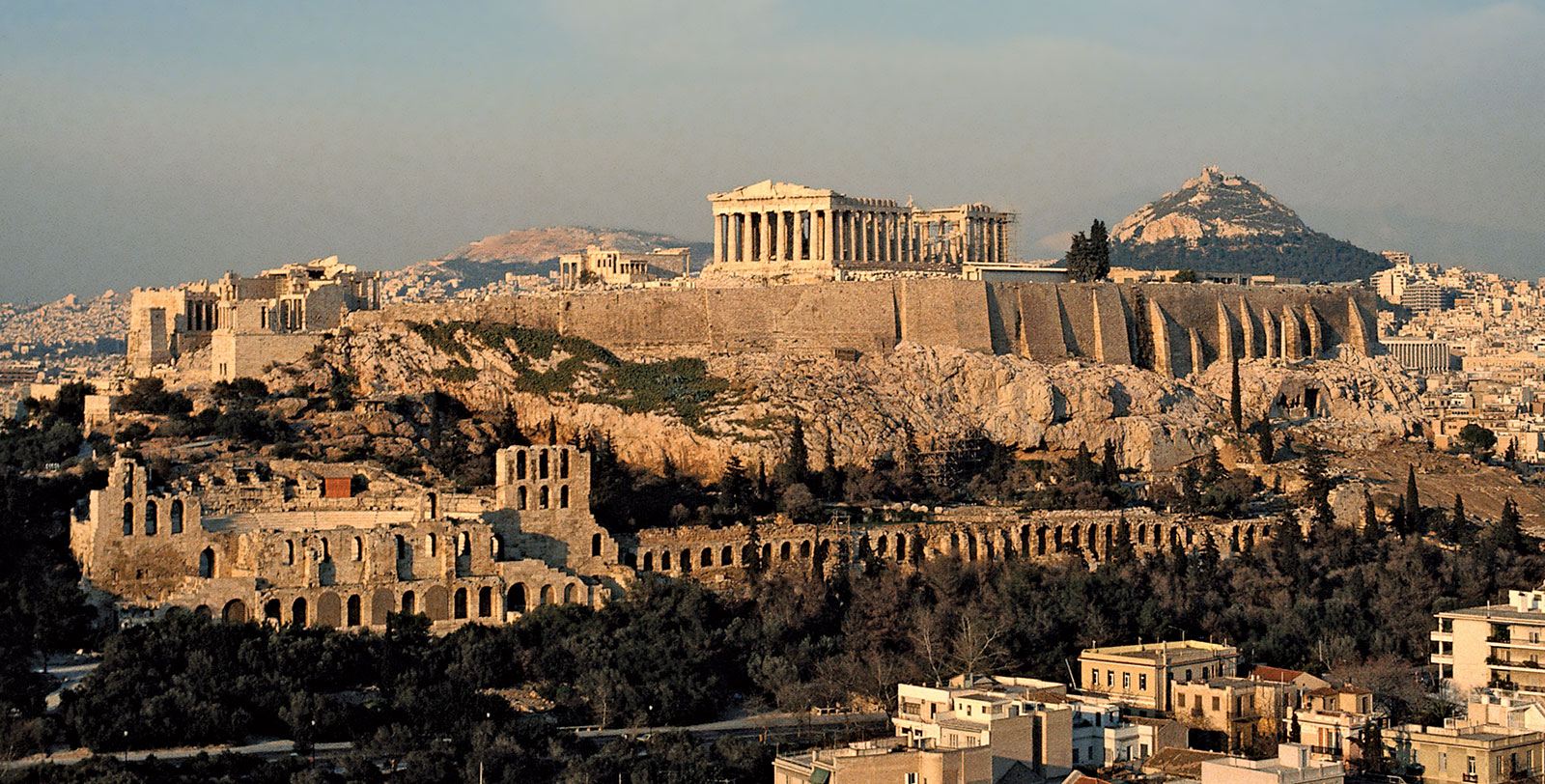
Athens is the capital of Greece. It was also at the heart of Ancient Greece, a powerful civilization and empire. The city is still dominated by 5th-century BC landmarks, including the Acropolis, a hilltop citadel topped with ancient buildings like the colonnaded Parthenon temple. The Acropolis Museum, along with the National Archaeological Museum, preserves sculptures, vases, jewelry and more from Ancient Greece.
Thessaloniki
Thessaloniki
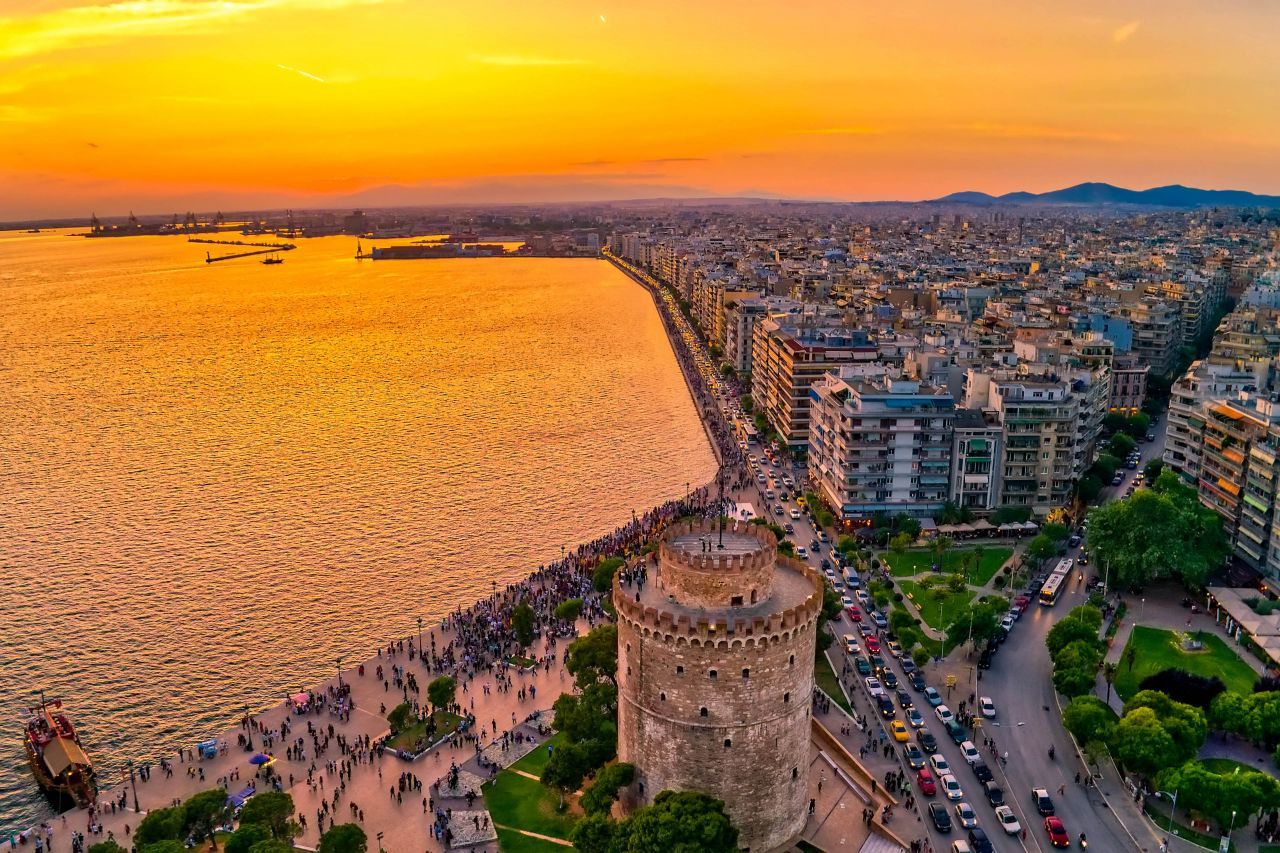
Thessaloniki is a Greek port city on the Thermaic Gulf of the Aegean Sea. Evidence of Roman, Byzantine and Ottoman history remains, especially around Ano Poli, the upper town. The ruins of Roman Emperor Galerius’ 4th-century palace include the Rotunda that has been both a church and a mosque. Much of the city center was destroyed in the Great Fire of 1917. The rebuilt 20th-century city has a modern European layout.
Santorini
Santorini
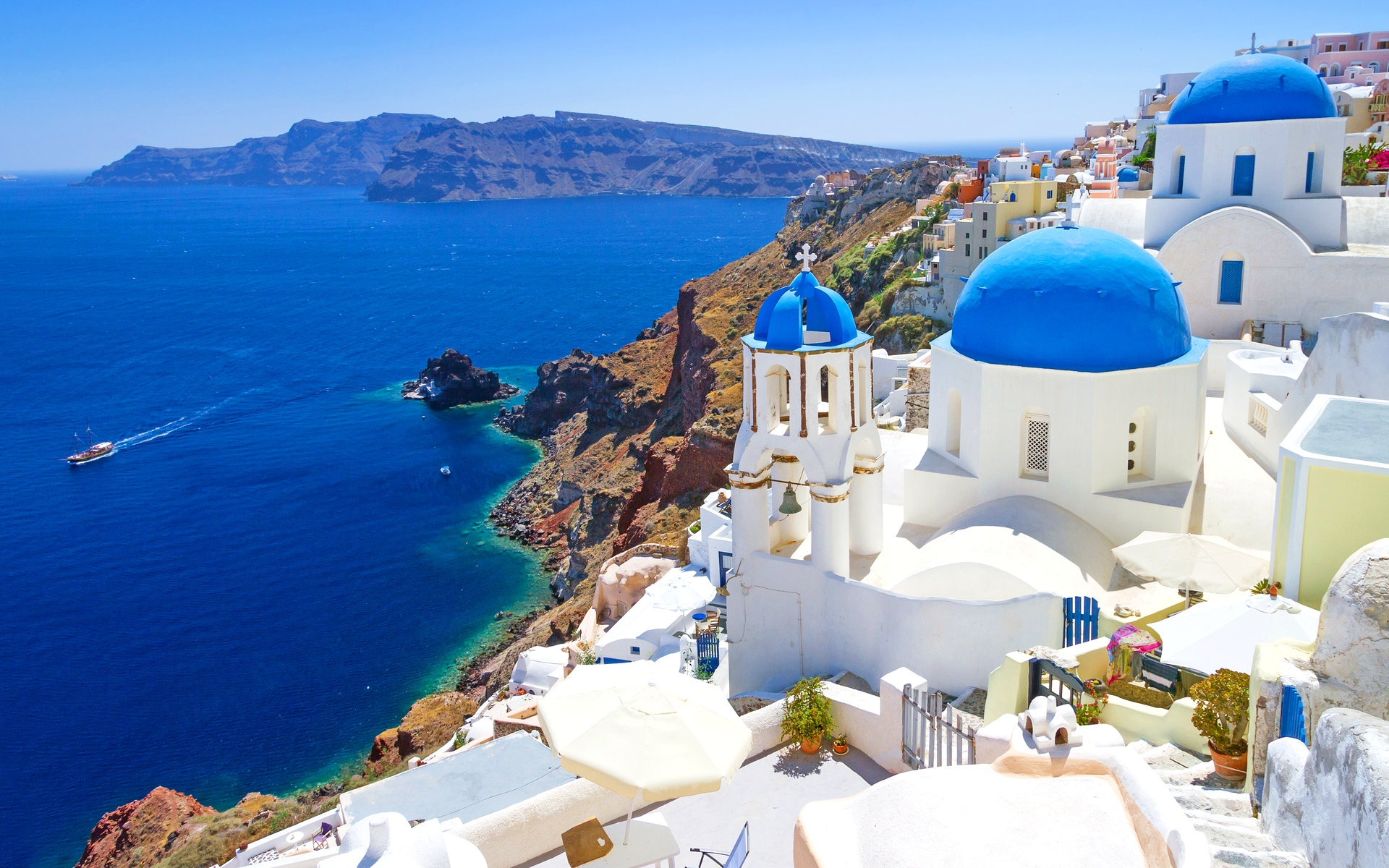
Santorini is one of the Cyclades islands in the Aegean Sea. It was devastated by a volcanic eruption in the 16th century BC, forever shaping its rugged landscape. The whitewashed, cubiform houses of its 2 principal towns, Fira and Oia, cling to cliffs above an underwater caldera (crater). They overlook the sea, small islands to the west and beaches made up of black, red and white lava pebbles.
Patmos
Patmos
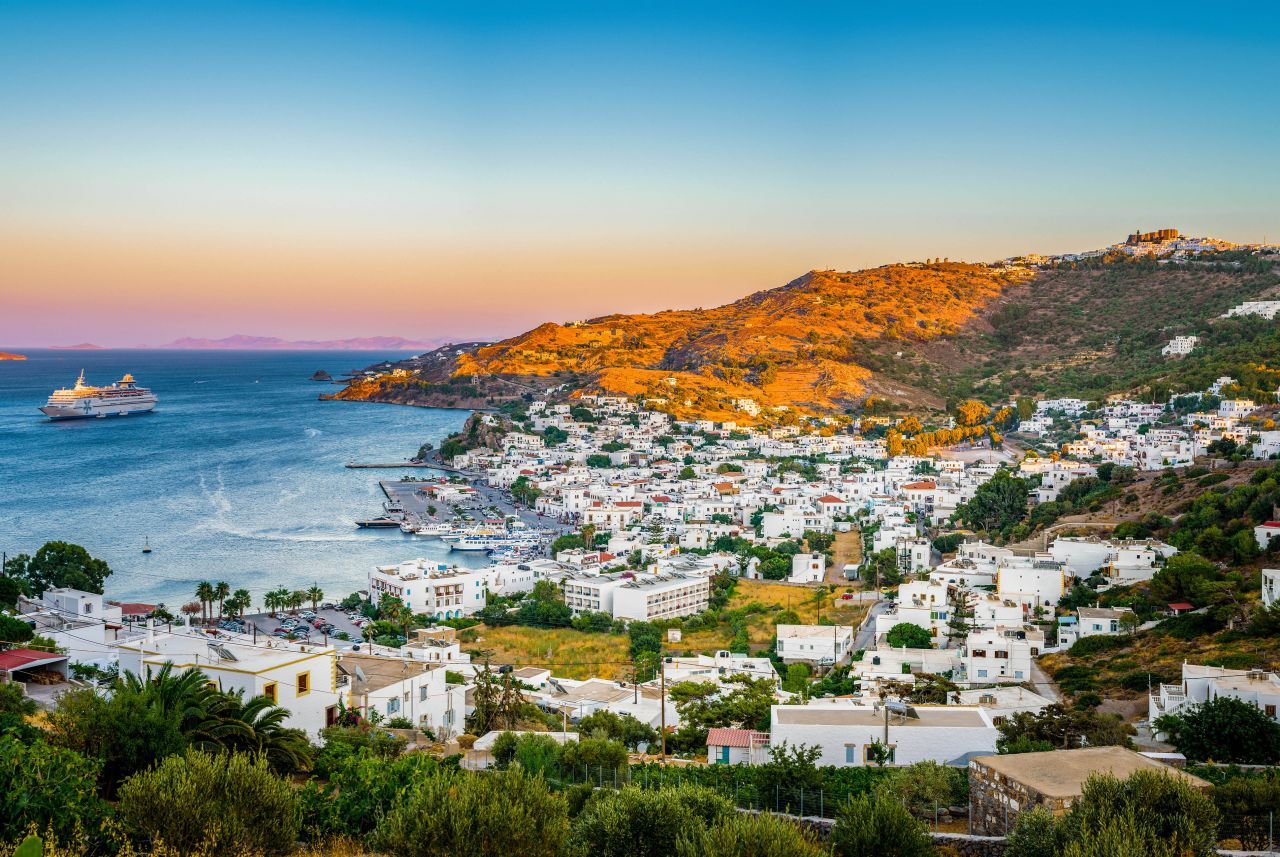
Patmos, an Aegean island in the north of Greece’s Dodecanese island group, is a significant Christian pilgrimage site. Its Cave of the Apocalypse is where John of Patmos (St. John the Theologian) is said to have written the Book of Revelations. A fortresslike, 11th-century monastery dedicated to the saint overlooks the whitewashed houses of the hilltop capital, Hora (also known as Chora).
Kalabaka
Kalabaka

Kalabaka is a town and a municipality in the Trikala regional unit, part of Thessaly in Greece. The population was 21,991 at the 2011 census, of which 8,330 in the town proper. The Metéora monasteries are located in the town. Kalabaka is the northwestern terminal of the old Thessaly Railways, now part of OSE
Kavala
Kavala
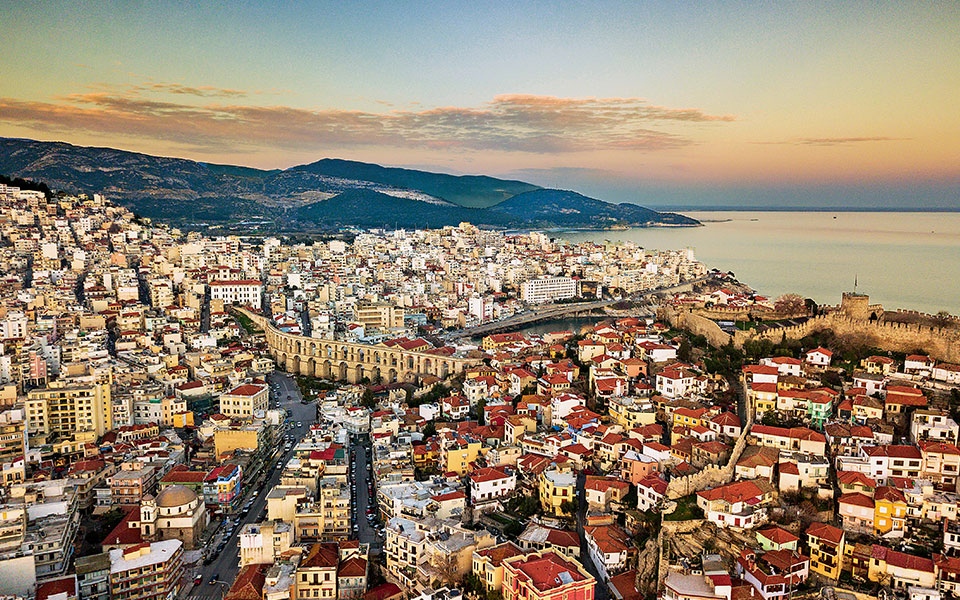
Kavala is a city in northern Greece, the principal seaport of eastern Macedonia and the capital of Kavala regional unit. The unique indigenous population[clarification needed], the Aromanians, name it Cavala. It is situated on the Bay of Kavala, across from the island of Thasos and on the Egnatia motorway, a one-and-a-half-hour drive to Thessaloniki (160 kilometres (99 miles) west) and a forty-minute drive to Drama (37 km (23 miles) north) and Xanthi (56 km (35 miles) east). It is also about 150 kilometers west of Alexandroupoli
Fayoum
El-Minya
Asyut
Why Choose Us
1. Over 15 years of success Stella Maris Tours has been setting standards in the local and regional tourism industry for over 15 years, and our years of experience have helped us craft finely-honed tour itineraries that never fail to delight. We’ve trekked and toured every attraction in our destinations many times over and are experts at making your trip as safe, comfortable, and memorable as possible. 2. Private guided tours Choose a vacation as unique as you are. Any Stella MarisTour can be custom tailored to meet your wants and needs whether you’re touring the classic attractions or new areas of interest. Our seasoned, knowledgeable professionals are well-equipped with the knowledge to make your private tour a memorable experience that is entirely your own. 3. We speak your language You’re reading this page in English, but did you know we have stuff and tour guides speak Romanian, Bulgarian, French, German, Arabic, Russian, Portuguese, Spanish, Italian, Chinese, and Japanese? We guide travelers from all over the world and are dedicated to providing top-tier services in their native languages. Your inquiries, reservation, and tours can all be conducted with multilingual staff. 4. Solid planning, super flexibility Stella Maris Tours staff and management are focused on bringing you the best trip possible, based on your individual needs and desires. Tour itineraries are carefully planned but easily restructured to the benefit of our travelers. 5. Safety and security commitment Our staff make keeping travelers safe a top priority. We’re always in the know while we’re on the go, so we can stay aware of any events that might affect your security and adjust plans accordingly. You’ll be with a staff member at all times during tour hours. 6. Excellence in service guarantee Quality is our top priority, and our team of fun and friendly experts are the secret ingredient to an amazing expedition. You’ll be awed by the sights on your itinerary, but it’s our personable and knowledgeable guides that will really help make your experience shine. 7. Concern for value and time We respect that your vacation is an investment of time and money and we want to help you get the most of it. Our local partnerships help us offer tour packages at extremely competitive prices, so you can see more and do more on your trip. 8. Around the clock customer care Our staff are available 24 hours a day, 7 days a week to answer your questions and help you out. and we’re here day and night to reply to your emails as well. 9. Ethical and sustainable tourism Stella Maris Tours is conscious of the impact tourism has on the local environment and economy, and we are committed to making that impact as positive as possible. We aim to operate as environmentally friendly as possible, and work with local businesses to support the Egyptian economy. We also make a donation to the Magdi Yacoub Heart Foundation for each booking reserved. 10. Secure online / bank transfer payment Your vacation should be stress-free, and that should include the payment. Our system is speedy and secure, and our friendly multilingual staff are here to help. After you’ve reached an agreement with your personal tour consultant, you can make an online payment to Stella Maris Tours via bank transfer.